How The World Cup Builds A Temporary Economy
The match is the visible product. The temporary economy is the real one.
- Research date
- July 5, 2026
- Reading time
- 5 min read
30-second takeaway
The 2026 World Cup is a masterclass in risk asymmetry, but not an automatic case against hosting.
System Map
Use the article sections to trace the trigger, transmission, hidden dependency and impact.
The Trigger
A World Cup match is visible. The machinery around it is not.
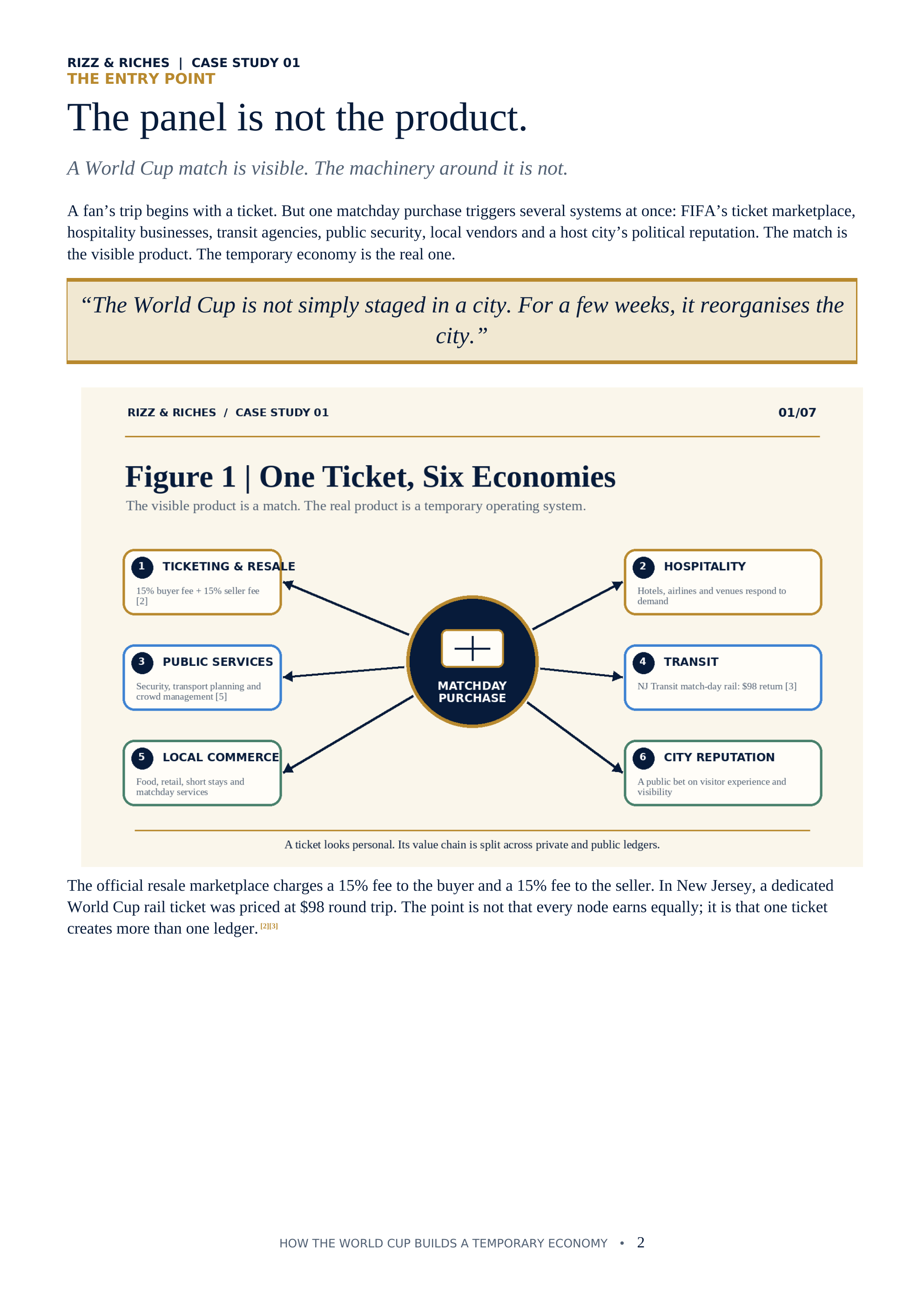
A fan’s trip begins with a ticket. But one matchday purchase triggers several systems at once: FIFA’s ticket marketplace, hospitality businesses, transit agencies, public security, local vendors and a host city’s political reputation. The match is the visible product. The temporary economy is the real one.
The document’s entry point is simple: “The World Cup is not simply staged in a city. For a few weeks, it reorganises the city.”
The official resale marketplace charges a 15% fee to the buyer and a 15% fee to the seller. In New Jersey, a dedicated World Cup rail ticket was priced at $98 round trip. The point is not that every node earns equally; it is that one ticket creates more than one ledger.
The Transmission
FIFA does not sell football. It sells rights.
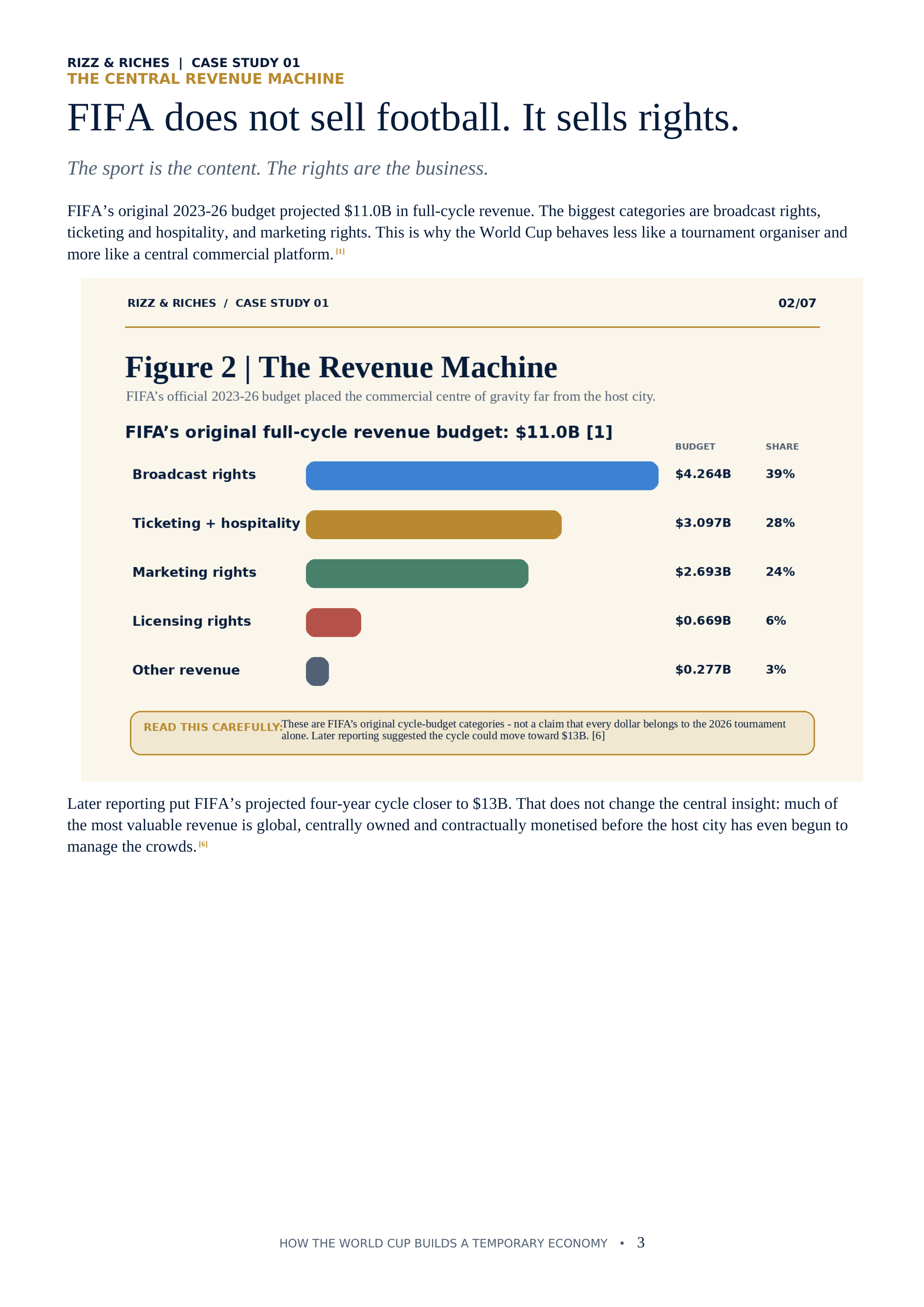
FIFA’s original 2023-26 budget projected $11.0B in full-cycle revenue. The biggest categories are broadcast rights, ticketing and hospitality, and marketing rights. This is why the World Cup behaves less like a tournament organiser and more like a central commercial platform.
Later reporting put FIFA’s projected four-year cycle closer to $13B. The case study treats that as a reported estimate, not a replacement for the official budget. The central insight remains the same: much of the most valuable revenue is global, centrally owned and contractually monetised before the host city has even begun to manage the crowds.
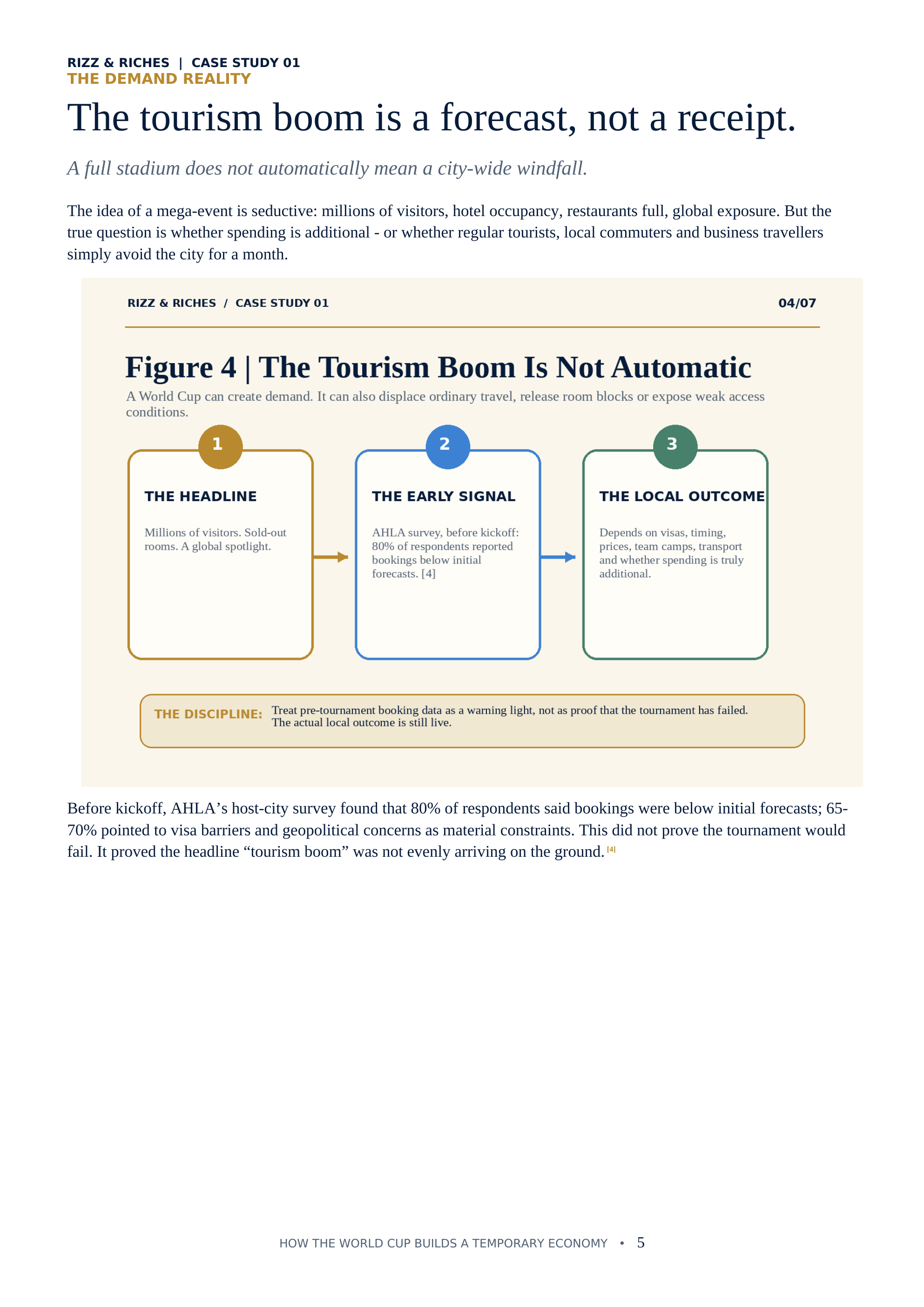
The tourism story is more fragile than the headline suggests. A full stadium does not automatically mean a city-wide windfall. The serious question is whether spending is additional, or whether regular tourists, local commuters and business travellers simply avoid the city for a month.
Before kickoff, AHLA’s host-city survey found that 80% of respondents said bookings were below initial forecasts; 65-70% pointed to visa barriers and geopolitical concerns as material constraints. This did not prove the tournament would fail. It proved the headline “tourism boom” was not evenly arriving on the ground.
The Hidden Dependency
The World Cup runs on two ledgers.
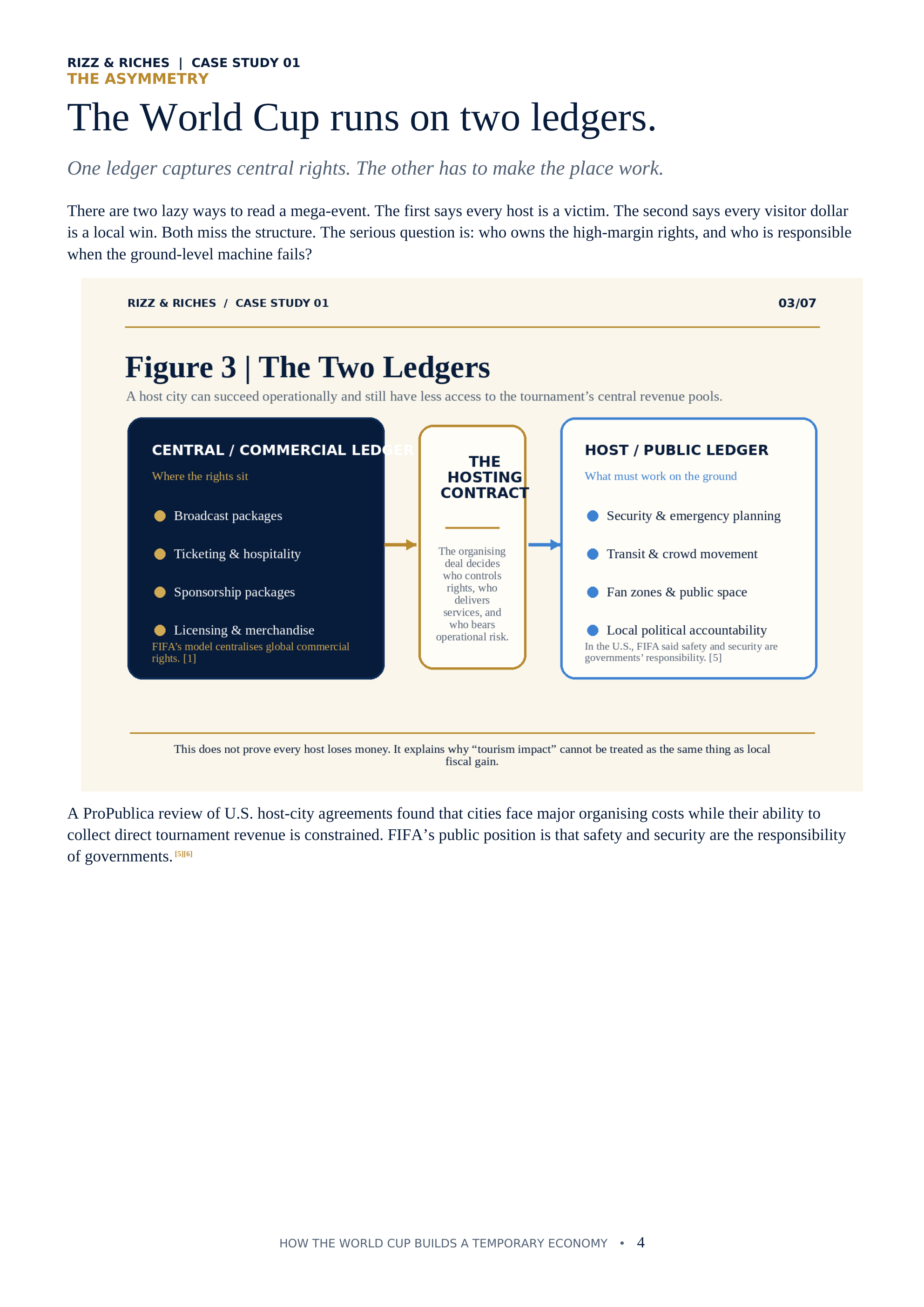
One ledger captures central rights. The other has to make the place work. There are two lazy ways to read a mega-event: one says every host is a victim, and the other says every visitor dollar is a local win. Both miss the structure.
The harder question is who owns the high-margin rights, and who is responsible when the ground-level machine fails.
A ProPublica review of U.S. host-city agreements found that cities face major organising costs while their ability to collect direct tournament revenue is constrained. FIFA’s public position is that safety and security are the responsibility of governments. That split between central monetisation and local operation is the hidden dependency behind the temporary economy.
Quiet Winners
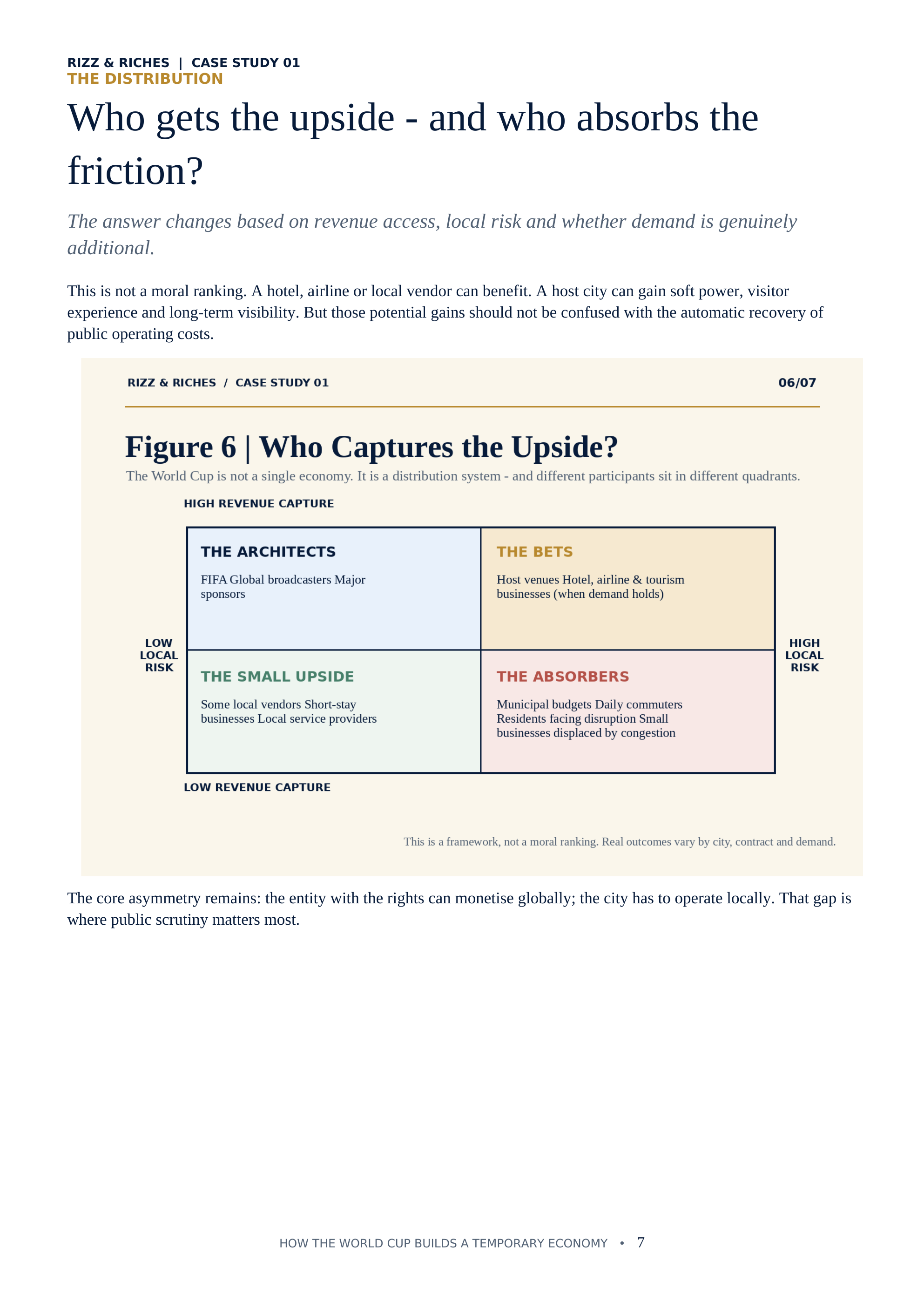
The document does not frame winners as a moral ranking. It identifies places where upside can exist.
FIFA and rights holders sit closest to the central revenue machine: broadcast rights, ticketing and hospitality, marketing rights and licensing. Those revenue streams can be global, contractually owned and monetised before the local operating burden fully arrives.
Hotels, airlines, hospitality businesses, local vendors and host cities can also benefit. A host city may gain soft power, visitor experience and long-term visibility. But those potential gains should not be confused with automatic recovery of public operating costs.
Quiet Losers
The friction falls where the event has to become a working place.
Host cities and public agencies absorb the challenge of operating crowds, transit, security and reputation. Local commuters, regular tourists and business travellers may also change behaviour if the tournament makes the city harder or more expensive to use.
The case study’s core asymmetry is that the entity with the rights can monetise globally, while the city has to operate locally. That gap is where public scrutiny matters most.
India / Youth Relevance
India is not hosting a match, but the tournament still offers a clean lesson in the economics of audience value.
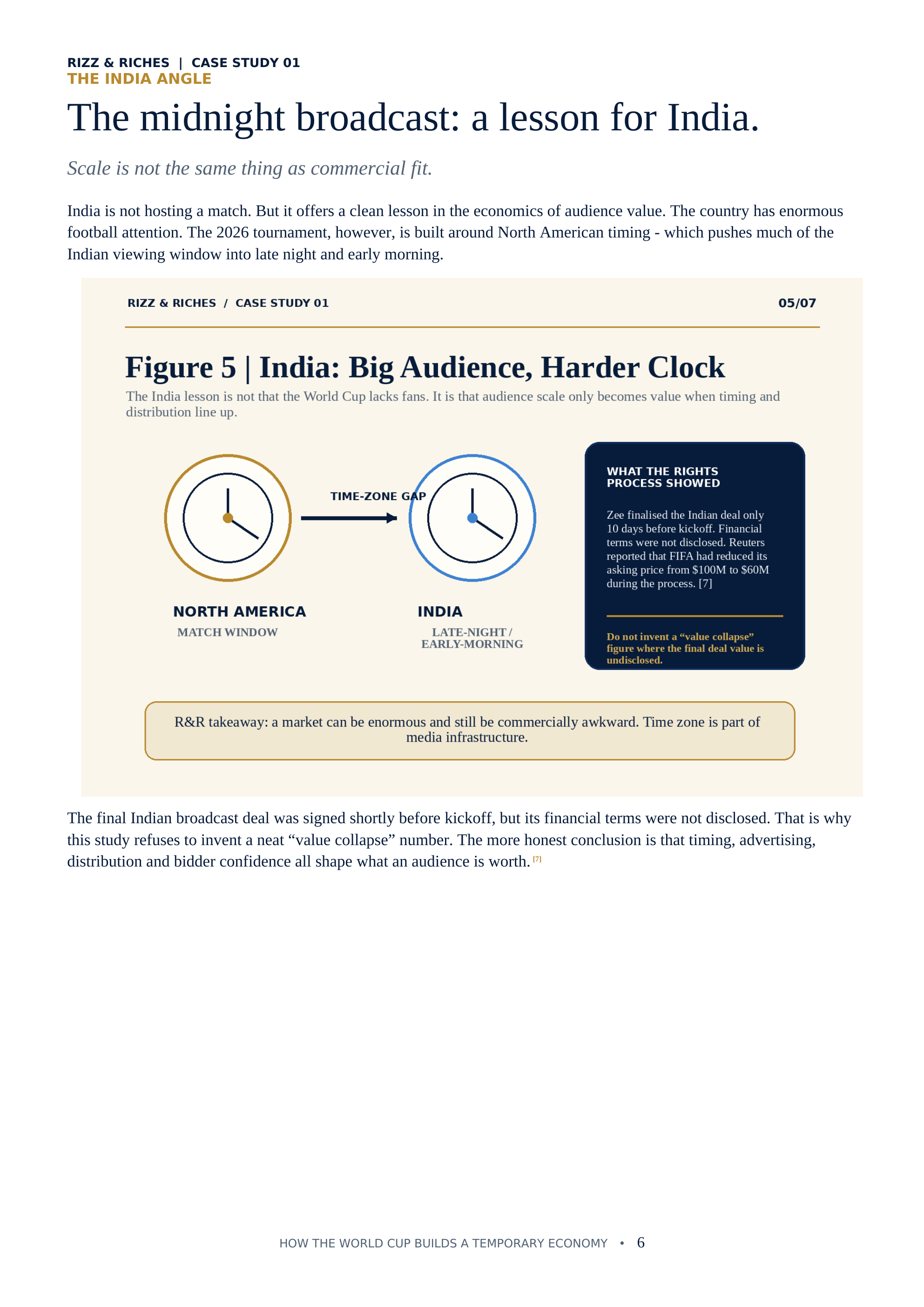
India has enormous football attention. The 2026 tournament, however, is built around North American timing, which pushes much of the Indian viewing window into late night and early morning.
The final Indian broadcast deal was signed shortly before kickoff, but its financial terms were not disclosed. This study does not invent a neat “value collapse” number. The more honest conclusion is that timing, advertising, distribution and bidder confidence all shape what an audience is worth.
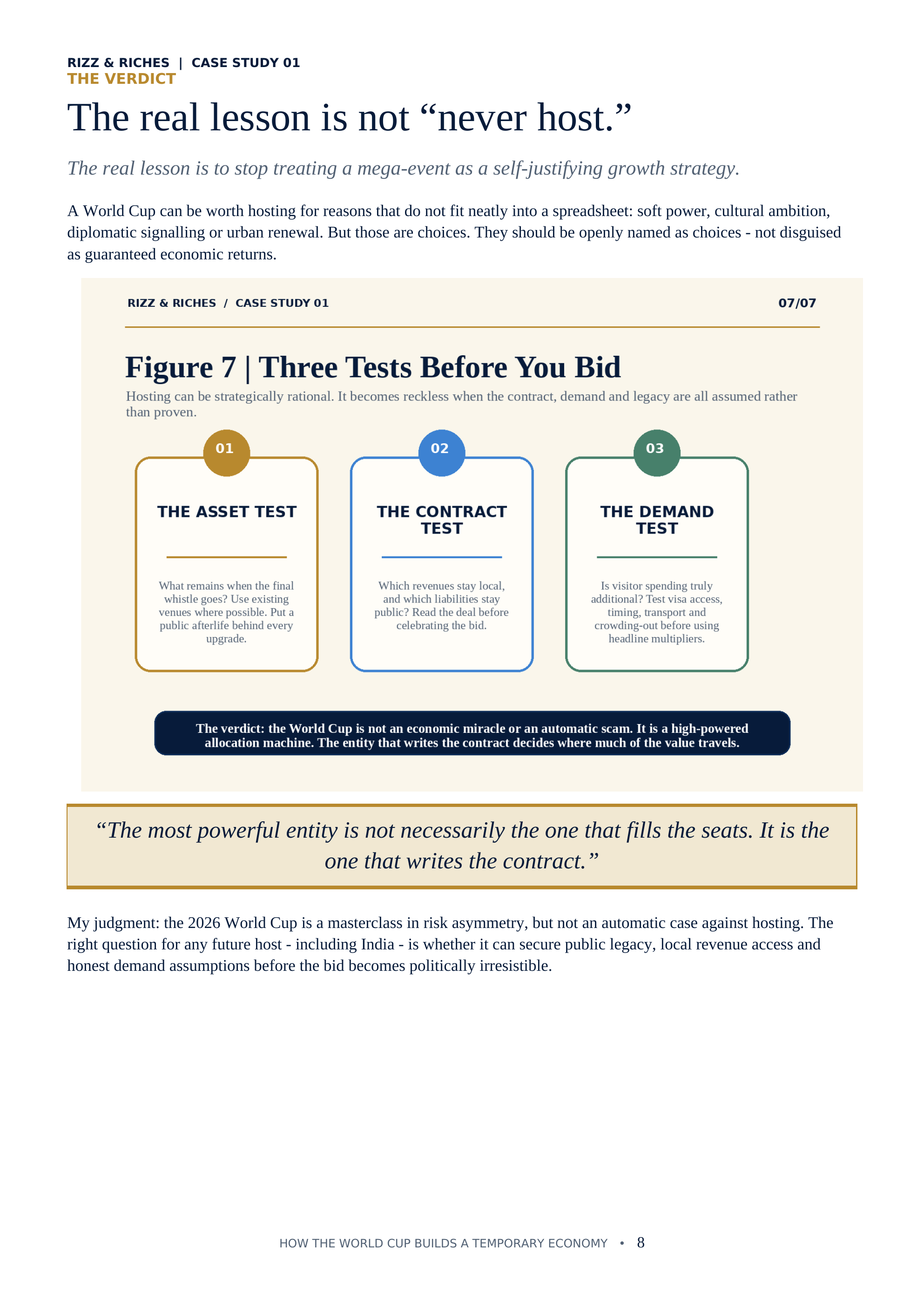
The right question for any future host, including India, is whether it can secure public legacy, local revenue access and honest demand assumptions before the bid becomes politically irresistible.
Sources and Further Reading
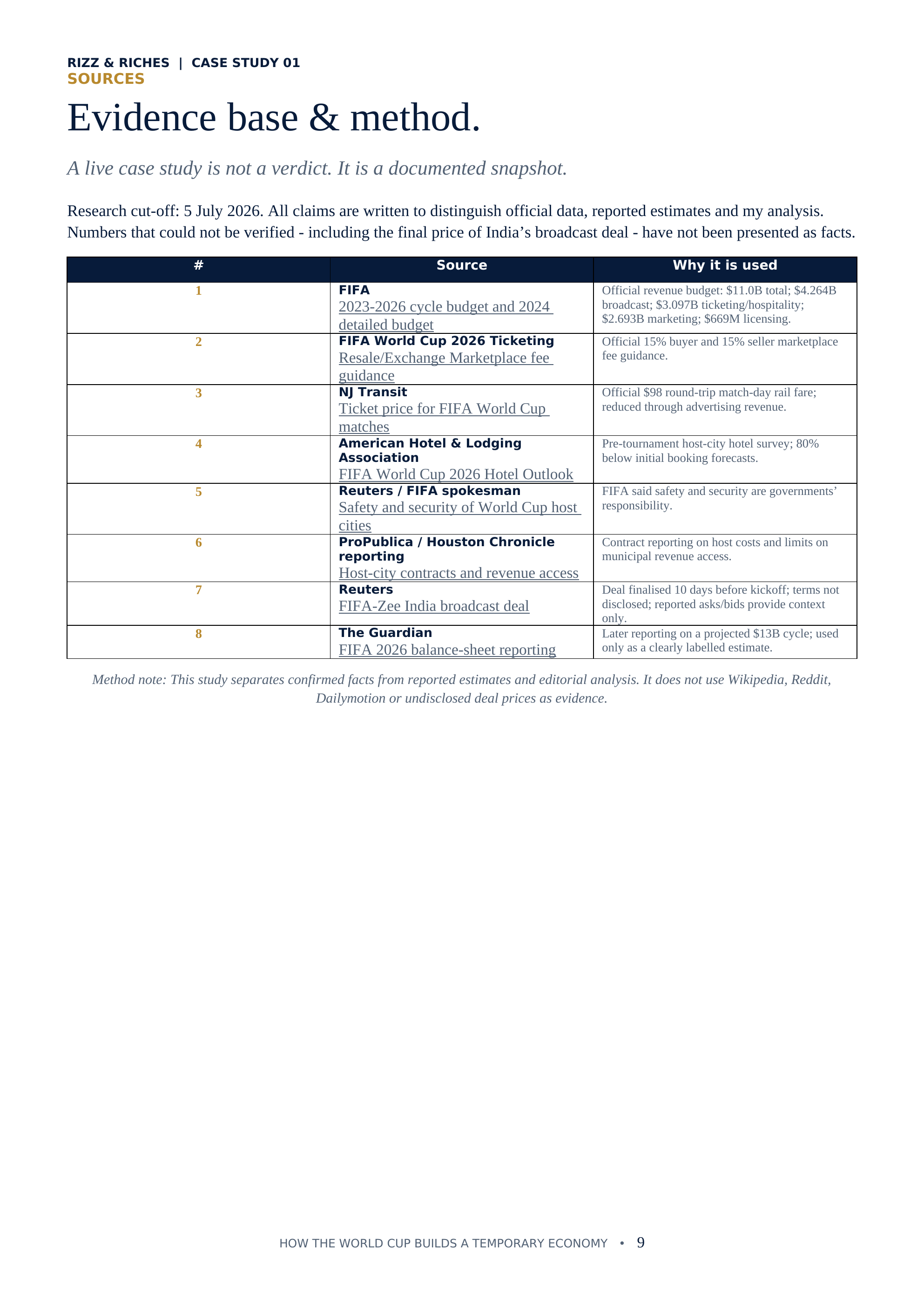
This study separates confirmed facts from reported estimates and editorial analysis. It does not use Wikipedia, Reddit, Dailymotion or undisclosed deal prices as evidence.
- FIFA: 2023-2026 cycle budget and 2024 detailed budget.
- FIFA World Cup 2026 Ticketing Resale/Exchange Marketplace fee guidance.
- NJ Transit: Ticket price for FIFA World Cup matches.
- American Hotel & Lodging Association: FIFA World Cup 2026 Hotel Outlook.
- Reuters / FIFA spokesman: Safety and security of World Cup host cities.
- ProPublica / Houston Chronicle reporting: Host-city contracts and revenue access.
- Reuters: FIFA-Zee India broadcast deal.
- The Guardian: FIFA 2026 balance-sheet reporting.
Visual appendix
Figures and original visual plates
High-resolution image exports from the supplied case-study document. Dense figures can be opened full-size for closer reading.